

The Theory of Conservation of Resources (COR) is a psychological stress theory developed by Stevan E. Hobfoll in 1989. It explains how people respond to stress based on their resources, i.e., things they value and try to protect.
The core idea of COR is that people strive to obtain, retain, and protect resources. Stress occurs when those resources are threatened, lost, or not gained after investment.
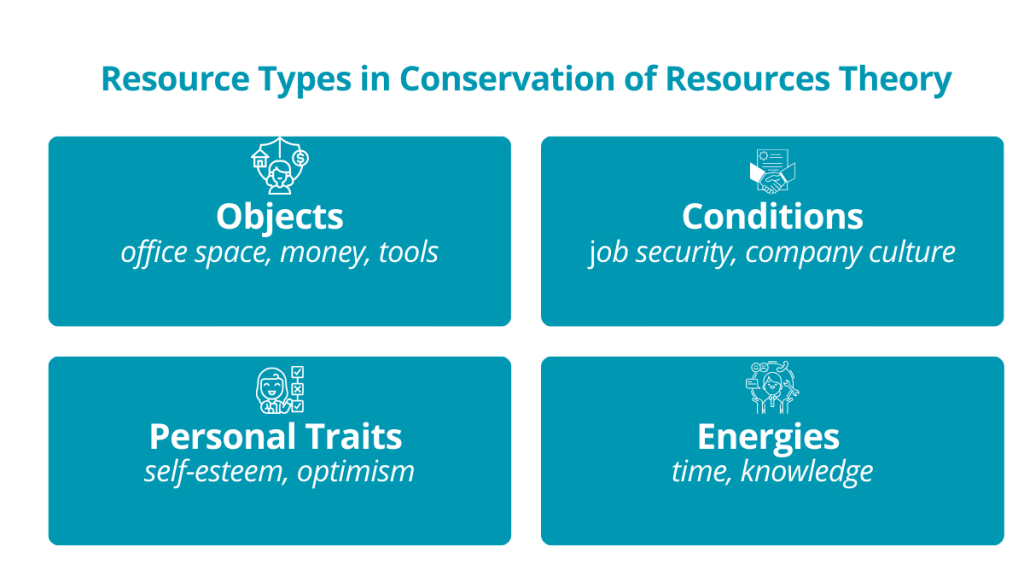
COR theory is widely used in organizational psychology in areas like employee burnout, recovery, job stress, work–life balance, and so on.
According to COR theory, stress arises in three main cases:
> Loss of resources (example: getting fired)
> Threat of resource loss (example: fear of getting fired)
> Failure to gain resources after effort (example: not getting a promotion or a bonus after hard work)
Key concepts of the theory of Conservation of Resources:
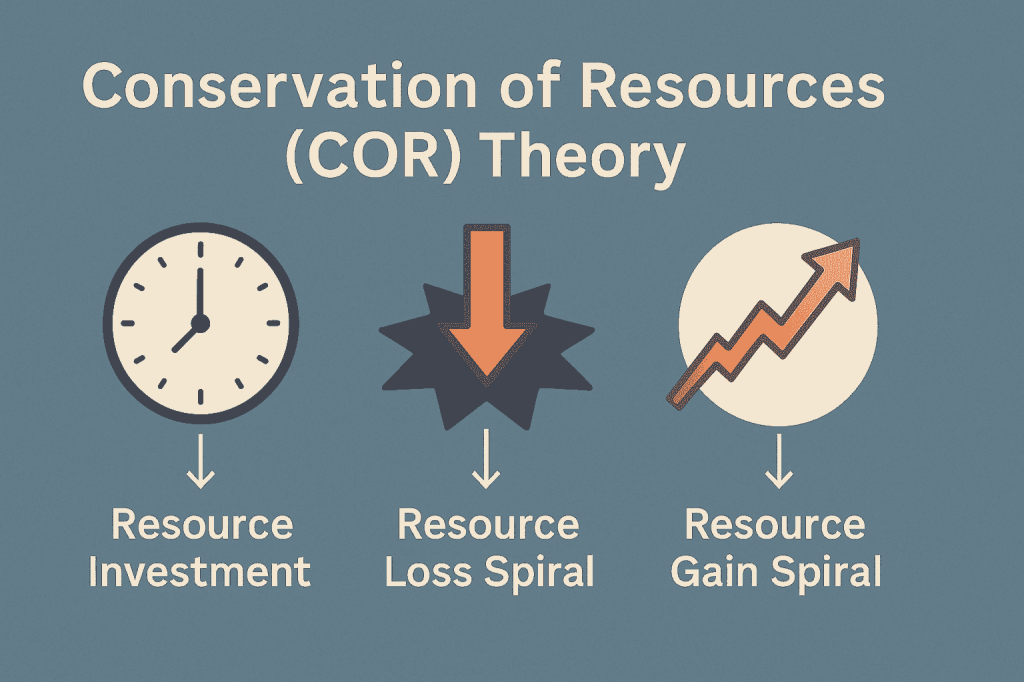
| Concept | Definition | example |
|---|---|---|
| Resource Loss Spiral | The fewer resources someone has, the more vulnerable they are to further loss | You worked late, overslept, missed your presentation, and now your manager removed you from the project because he can’t depend on you. |
| Resource Gain Spiral | The more resources someone gains, the likelier they are to gain even more. | Getting praised in a meeting, boosts your confidence, so you help a teammate, and they nominate you for employee of the month. |
| Resource Investment | Someone may use existing resources to gain more or protect themselves against loss | You work overtime to get a promotion or avoid job loss. |
Can we not link the resource loss spiral and the resource gain spiral to the famous aphorism that says, “The rich get richer and the poor get poorer”? Does this say something about human nature? Or is it the system that we live in that made us this way?
What does this mean for managers?
COR theory is a powerful lens to design resilient teams, prevent burnout, and drive sustainable performance.
To do this, the manager must:
> Identify stress sources: stress triggered by real or potential loss of resources. (Resources can be anything employees value: time, energy, support, skills, autonomy, etc.)
> Prevent stress sources to cause avoidable loss of resources. (Example: prevent burnout by monitoring workload.)
> Invest in resource gains to build resilience and engagement, especially during times of stress. For example, provide things like flexible scheduling, learning & development opportunities, regular feedback and appreciation, and team building activities.
In one sentence: the manager’s role is to prevent loss spirals and invest in resource gains.
 Loor Lemon
Leave a comment